







Have you ever wondered how a technology with clear advantages can still fall short of becoming a universal standard? The story of a promising new image format offers a powerful lesson.
We are witnessing a pivotal moment in digital imaging. A format once hailed as the future now faces an uncertain path. This leaves creators and developers questioning their optimization strategies.
This analysis explores the complex factors behind this outcome. We examine the technical, political, and ecosystem dynamics that led to its decline. Superior compression and features were not enough to guarantee widespread adoption.
We investigate how a major browser’s decision created a domino effect. This ultimately prevented the format from achieving critical mass. Other platforms embraced it, but the fragmentation proved too great.
For those using a specific popular format, we explain what this shift means for your workflow. We provide data-driven insights to help you make informed decisions about your strategy.
Key Takeaways
- The adoption of new image formats depends heavily on browser support and industry politics.
- Superior technical specs alone do not guarantee a format’s success on the web.
- Decisions by major browser vendors can make or break a new technology’s future.
- Understanding past format struggles helps anticipate future shifts in the ecosystem.
- It is crucial to have a flexible image optimization strategy that can adapt to change.
Introduction
Modern web experiences demand careful consideration of how visual elements impact overall performance. We’ve entered an era where image optimization directly influences Core Web Vitals metrics. These metrics determine search rankings and user satisfaction.
The choice of image formats affects more than just loading speed. It shapes how efficiently you serve content across diverse devices and network conditions. This makes file format selection a strategic business decision with real implications.
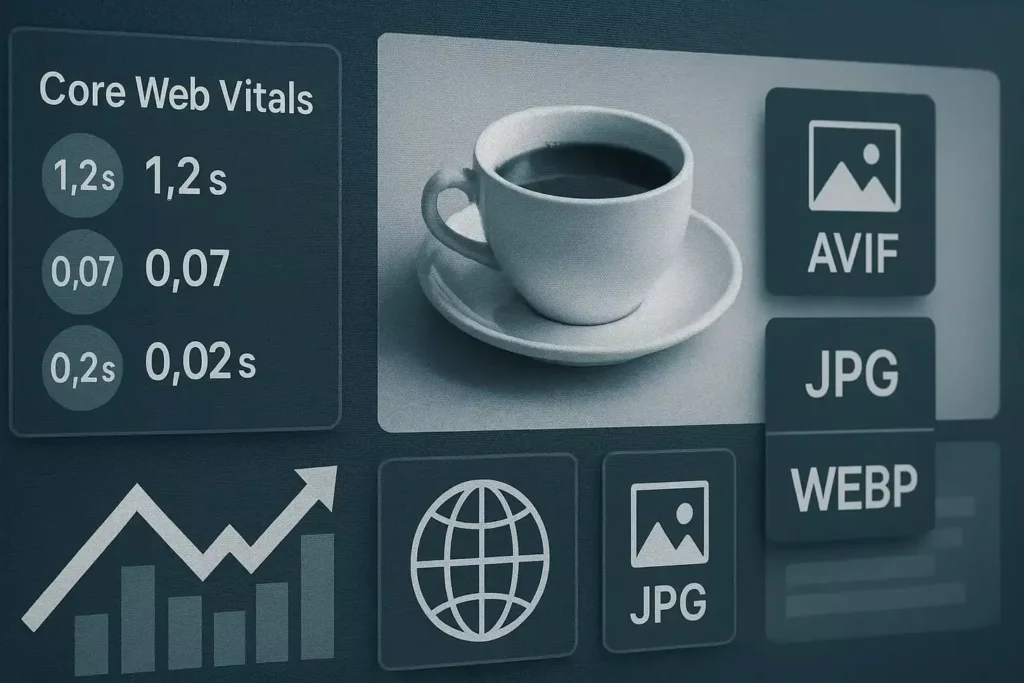
Today’s web landscape shows unprecedented fragmentation in image formats. Traditional options compete against next-generation alternatives. Each promises better compression and enhanced features for modern website needs.
Understanding why one format struggled reveals fundamental industry tensions. It highlights the challenge of coordinating ecosystem-wide adoption. Technical merit alone cannot guarantee success in the competitive web environment.
We’ll guide you through this complex narrative. Our analysis helps developers and decision-makers determine which technologies deserve attention. This ensures your resources align with sustainable image optimization strategies.
Background of JPEG XL and WebP in the Digital Image Landscape
Browser vendor choices have become the critical factor determining which image formats gain traction online. We see this clearly in the contrasting paths of different compression technologies.
The digital imaging ecosystem operates on a delicate balance of technical merit and market coordination. Even formats with superior specifications need widespread backing to succeed.

Evolution of Image Formats and Standards
The ISO/IEC standardization process represents a significant milestone for any new format. Official recognition provides credibility and encourages broader industry adoption.
WebP established itself through gradual but consistent browser integration. This created a stable foundation for developers to build upon with confidence.
Newer formats face higher expectations for both performance and compatibility. The bar for adoption continues to rise as user demands evolve.
Historical Developments in Browser Support
Early experimental support often signals a browser’s interest in emerging technologies. Initial enthusiasm can create momentum that drives broader ecosystem engagement.
However, inconsistent support across different browsers creates fragmentation challenges. Developers hesitate to invest in formats without reliable cross-platform compatibility.
Major browser decisions create ripple effects throughout the entire web landscape. These choices ultimately determine which technologies become viable options for content creators.
Market Trends and Stakeholder Perspectives
Public statements from major technology companies provide a window into the strategic thinking that shapes web standards. These perspectives reveal how organizational priorities influence format adoption decisions.
Insights from Industry Experts and Developers
The Google Chrome team articulated a clear position in 2022. Jim Bankoski stated they would “stop Chrome’s experiment” after “weighing the data.”
This decision shifted responsibility to developers. The team suggested WebAssembly implementations as an alternative path forward.
Jon Sneyers offered crucial context about internal dynamics. He clarified that the Chrome team operates separately from Google Research departments.
Reactions from Browser Makers and Software Vendors
Mozilla’s position differed significantly from Chrome’s approach. Distinguished engineer Martin Thomson focused on competitive differentiation concerns.
He noted the format didn’t perform sufficiently better than alternatives. However, Mozilla left the door open for future support based on demand.
The Interop 2024 group cited a lack of consensus as its primary rationale. This response failed to address overwhelming community support for the technology.
We see a pattern where each browser vendor cites different justifications. These varied rationales suggest post-hoc explanations rather than consistent principles.
Critical Analysis of Technical and Ecosystem Challenges
The adoption of new media formats involves a complex interplay of technical merit and market dynamics. We need to look beyond surface explanations to understand why promising technologies sometimes struggle to gain traction.
Examining Chrome’s Evaluation Framework
Chrome’s stated criteria for format evaluation appear comprehensive on paper. They consider compression performance, decoder speed, encoder efficiency, and cross-platform support. However, the application of these standards has faced significant criticism.
Jon Sneyers identified methodological flaws in Chrome’s published test results. The analysis used suboptimal settings and failed to showcase the format’s distinctive features. Despite detailed feedback, these concerns went unaddressed.
The ecosystem presents a classic coordination problem. Other major players embraced the technology, but Chrome’s dominant position created a stalemate. This dynamic highlights how market power can override technical advantages.
For current format users, this outcome means continued fragmentation. The web landscape will remain divided between existing options rather than consolidating around a unified solution. Technical excellence alone cannot overcome these ecosystem barriers.
Technical Performance and Compression Analysis
The real-world performance of any image format hinges on a delicate balance between compression efficiency and computational demands. We need to examine how different technologies handle this critical trade-off.
Browser vendors establish specific criteria for evaluating new formats. These standards focus on practical considerations that affect everyday users and developers alike.
Evaluation of Compression Techniques and Test Results
Chrome’s framework emphasized decoder speed for fast rendering and encoder efficiency with hardware support. These requirements reflect the needs of large-scale content platforms.
However, testing methodologies can significantly impact results. Suboptimal settings may not showcase a format’s true capabilities. This creates challenges for fair comparison.
Comparative Overview of Encoding and Decoding Speeds
Traditional formats benefit from decades of optimization. JPEG processing is exceptionally fast with widespread hardware acceleration. PNG offers rapid decoding through mature implementations.
Newer formats face different performance characteristics. Lossy compression generally processes faster than lossless alternatives. The lossless WebP variant demonstrates this trade-off clearly.
Higher compression ratios often require more encoding resources. This creates infrastructure costs for platforms managing large image libraries. The balance between file size savings and processing overhead remains crucial.
Impact on Browser Support and User Adoption
The browser landscape experienced a seismic shift in October 2022 that would fundamentally reshape format adoption patterns. Google Chrome’s decision to remove support for certain features created immediate consequences throughout the digital ecosystem.
We see how a single vendor’s choice can override technical merit and industry standardization. This demonstrates the concentrated power in today’s web environment.
Chrome’s Decision and Its Ripple Effect on Adoption
Jon Sneyers, a key contributor, captured the immediate impact of Chrome’s move. His assessment reveals how critical browser backing remains for any new technology.
“Unfortunately, Chrome’s decision has slowed wider adoption in web browsers.”
By 2025, a paradoxical situation emerged. Professional image software widely embraced the format while web deployment remained impractical. This divergence highlights the unique challenges facing web standards.
The chicken-and-egg dynamic became particularly damaging. Software vendors hesitated to invest without Chrome support, while Chrome cited insufficient ecosystem adoption. This created a self-fulfilling prophecy that stalled progress.
Current browser support statistics reveal the stark contrast between formats:
| Format | Support Status | Major Browser Coverage |
|---|---|---|
| WebP | Widely Available | Universal |
| AVIF | Newly Available | All Major Browsers |
| JPEG XL | Below 15% | Safari, Limited Interest |
Chrome’s dominant market position (approximately 65% share) makes its support decisions particularly consequential. Developers cannot ignore this reality when choosing technologies for their projects.
For those using established formats, this situation offers both reassurance and caution. Universal support provides stability, but the concentration of power creates uncertainty about future standards.
Future Outlook for Next-Gen Image Formats
The practical path forward for web developers focuses on two well-supported formats that balance performance and compatibility. We recommend implementing a dual-format strategy using modern HTML elements.
Major platforms have embraced these technologies with robust support systems. WordPress added native handling for both formats in recent versions.
Emerging Standards and Potential Innovations
The HTML element provides the foundation for smart format selection. By offering multiple tags, browsers automatically choose the optimal file for each user.
Conversion tools have matured significantly across different environments. Options range from online applications to command-line utilities and CMS plugins.
Industry Predictions and the Path Forward
We see the industry settling into a stable equilibrium with clear use cases for each format. This approach maximizes benefits while maintaining broad compatibility.
Testing remains crucial for identifying optimization opportunities. Lighthouse audits help quantify potential improvements without requiring blind conversions.
Key implementation steps include:
- Using AVIF for photographic content where it excels
- Implementing WebP for broader compatibility needs
- Maintaining PNG fallbacks for graphics with transparency
- Regular testing with performance audit tools
Conclusion
The journey through modern image format adoption reveals crucial lessons for digital creators. Technical excellence alone cannot guarantee success in our complex ecosystem.
For developers and website owners, the practical path forward remains clear. Focus on implementing both WebP and AVIF formats using smart delivery strategies.
Use conversion tools like the Squoosh app to convert WebP files efficiently. These applications help optimize your website performance while maintaining compatibility.
The WebP format provides reliable baseline support across all modern browsers. This makes it an essential part of any image optimization strategy.
We empower you to make informed decisions that balance performance with practical considerations. Your investment in current standards will serve your projects well into the future.
FAQ
Q: What is the main reason JPEG XL support was removed from browsers like Google Chrome?
A: The primary reason was a lack of broad ecosystem support and developer adoption. Despite its technical advantages, major browser makers, including the Chrome team, concluded there was insufficient demand from websites and applications to justify maintaining the feature. This decision created a ripple effect, leading other browsers to reconsider their support.
Q: Should I stop using WebP for my website’s images?
A: Absolutely not. WebP remains a highly efficient and widely supported image format. Its excellent compression performance, combined with near-universal browser support, makes it a reliable choice. The situation with JPEG XL actually reinforces the value of established, well-supported formats like WebP for web development.
Q: How does AVIF compare to WebP, and is it a better alternative?
A: AVIF (AV1 Image File Format) often provides superior compression and higher image quality at smaller file sizes compared to WebP, especially for complex images. However, its encoding and decoding speeds can be slower, and its browser support, while growing, is not as universal as WebP’s. For most use cases, WebP offers a fantastic balance of performance, compression, and compatibility.
Q: What does this mean for the future of new image formats?
A: The JPEG XL case highlights that technical superiority alone is not enough for a format to succeed. Widespread adoption requires strong backing from major industry players, robust tooling for developers, and a clear migration path from existing standards. It suggests that future formats will need to demonstrate not just better compression but also a compelling value proposition for the entire ecosystem.
Q: Can I still convert my JPEG and PNG files to WebP for better website performance?
A: Yes, and we highly recommend it. Converting legacy JPEG and PNG images to the WebP format is one of the most effective ways to improve your website’s loading speed and reduce bandwidth usage. Many content management systems and development tools have built-in support for this conversion, making the process straightforward.
Q: Are there any lossless compression benefits with WebP for graphics like logos?
A: A> Yes, WebP supports both lossy and lossless compression. For images where preserving every single pixel is critical, such as logos, technical diagrams, or screenshots, the lossless WebP mode provides significantly better compression than PNG while maintaining perfect image quality. This makes it an excellent replacement for PNG images on the web.